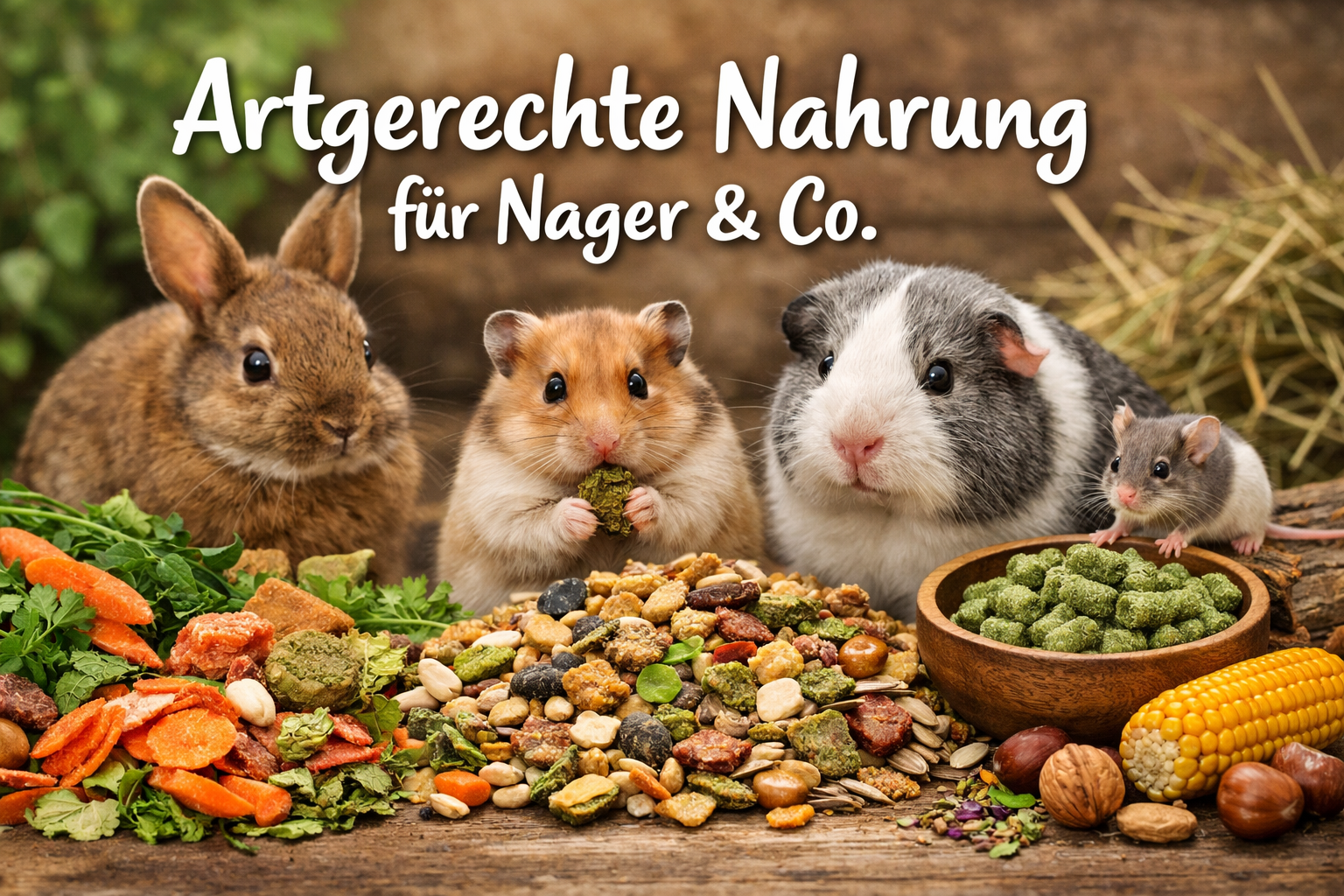

Small animal food - species-appropriate food for rodents & co.
You want to feed your small animal a species-appropriate diet and are wondering which small animal food really makes sense. In our daily advice and therapeutic work, we encounter many rodents and small animals with digestive problems, dental problems, skin changes or a weakened immune system. Experience shows that an inappropriate diet is very often a key trigger.
Guinea pigs, rabbits, hamsters, dwarf hamsters, gerbils and mice have very different needs. Nevertheless, they are often fed similar food mixtures. However, species-appropriate nutrition means understanding and taking into account the natural requirements of the respective animal species - not feeding what is practical or visually appealing.
What does species-appropriate nutrition mean for small animals?
Species-appropriate nutrition is based on the animals' natural way of life. Rodents and rabbits are designed to eat raw fiber-rich, structured food throughout the day. Fresh plants, herbs, grasses, seeds and hay form the basis - not highly processed mixtures or sugary snacks.
Species-appropriate small animal food takes into account
-
natural digestion and the sensitive gastrointestinal system
-
Tooth abrasion thanks to structure-rich food and raw fiber
-
the individual metabolism, preferences and taste
-
age, activity and state of health
The aim is to support the organism, promote vitality and prevent long-term complaints.
Hay as a basis - indispensable for many small animals
For rabbits, guinea pigs and chinchillas, high-quality hay is a central component of their daily diet. It not only ensures stable digestion, but is also essential for natural tooth abrasion. A lack of or poor quality hay can lead to serious dental problems and digestive disorders.
Hay should:
-
be available at all times
-
be low in dust and free of mold
-
have a good structure
For other rodents, such as degus or colored mice, food rich in structure also plays an important role, adapted to the respective animal species.
Fresh food - quality before variety
Fresh vegetables, herbs, fruit and suitable plants provide important vitamins, including vitamin C, and secondary plant substances. However, not everything that has a healthy effect is suitable for every animal. Too much or the wrong combination of fresh food can put a strain on the intestines.
Species-appropriate fresh feeding means
-
Getting used to new food slowly
-
Pay attention to compatibility
-
feed seasonally and variedly
Individual differences are completely normal and should be respected.
Critically scrutinize dry food
Many commercially available rodent foods contain sugar, grain, molasses or artificial additives. These ingredients are unsuitable for many small rodents and can lead to metabolic problems, obesity or misaligned teeth in the long term.
Not every pellet food or compound food is fundamentally bad, but it should be used selectively and consciously. The composition with high-quality ingredients, such as pea flakes, nuts and seeds, is decisive - not the packaging or advertising promises.
Recognize individual needs
There are also major differences within an animal species. Young animals, senior citizens or animals with pre-existing conditions have different nutritional requirements. Digestive problems, skin changes or behavioral abnormalities can be indications of unsuitable feeding.
An individual assessment helps to avoid over- or underfeeding and to provide targeted support for the animal.
Natural support for the gut and immune system
Intestinal health also plays a central role in small animals. A species-appropriate diet can promote balance in the digestive system and strengthen the immune system. Supplementary feed and additives can have a supportive effect - provided they are used sensibly and individually.
It is important not to cover up symptoms, but to understand the causes and provide holistic support. Find out more about holistic care and individual support at Tier im Mittelpunkt.
Conclusion: Species-appropriate nutrition starts with understanding
Species-appropriate nutrition for rodents and small animals means taking their natural needs seriously. Less industrial products, more structure, freshness and individuality. Those who are prepared to take a closer look and adapt their small animal food will create an important basis for health, well-being and a long, balanced animal life.
For personal advice and customized feeding recommendations, visit Tier im Mittelpunkt. Do you have any questions about your small animal's diet or would you like individual advice from Tier im Mittelpunkt?
We will be happy to help you.
Frequently asked questions
What is particularly important in the species-appropriate nutrition of small animals?
When feeding small animals a species-appropriate diet, it is important to take into account the natural needs of the respective animal species. Above all, this means providing a raw fiber-rich, structured diet such as hay, fresh plants, herbs and seeds. Sugary snacks and highly processed feed mixtures should be avoided as they can cause digestive problems and health complaints.
Why is hay so important for rodents and rabbits?
Hay is the main food source for many small animals such as rabbits, guinea pigs and chinchillas. It not only aids digestion and provides important raw fibers, but also ensures natural tooth abrasion. Without sufficient hay, dental and gastrointestinal problems can arise which can severely affect the health of the animals.
What role does fresh food play in the diet of small animals?
Fresh food such as vegetables, herbs and fruit provides important vitamins and secondary plant substances that contribute to animal health. However, it should be introduced slowly and attention should be paid to tolerance, as too much or unsuitable fresh food can put a strain on the sensitive intestines. A varied and seasonal diet is also recommended.
Why should dry food be viewed critically?
Many commercially available dry foods contain sugar, grain, molasses or artificial additives that are unsuitable for many small animals. In the long term, these ingredients can lead to obesity, metabolic disorders or dental problems. It is therefore important to ensure a high-quality composition with natural ingredients such as pea flakes, nuts and seeds and to use dry food consciously and selectively.
How can the individual needs of small animals be taken into account when feeding them?
Every small animal has different nutritional requirements depending on its age, state of health and activity. Young animals, senior citizens or sick animals often require special feed compositions. Observations such as skin changes, digestive problems or changes in behavior can be indications of an unsuitable diet. Individual advice helps to adapt the food optimally and promote the well-being of the animals.